Counselor profile
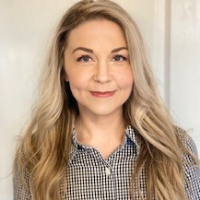
Sarah Hall
LPC
Licensed Professional Counselor - Anxiety and Relationships
License and NPI on record
- Credentials
- LPC
- License
- LPC, Missouri · No. 2012042891
- NPI
- 1902146442
- Experience
- 10 years
- Languages
- English
- State
- Missouri
As supplied to BetterHelp. A license can be checked with the state board, and an NPI with the national NPI registry.
- Cognitive behavioral therapy
- Dialectical behavior therapy
- Acceptance and Commitment Therapy
About Sarah
Sarah Hall is a Licensed Professional Counselor (LPC) in Missouri with 10 years of clinical experience. She works with people facing anxiety, stress, relationship strain, parenting challenges, mood concerns, and issues like trauma and grief.
She has worked in both independent practice and agency settings. That background means she has seen many kinds of problems and several ways people cope with them. Her training includes a Bachelor of Arts in psychology from the University of Missouri and a Master of Education from Stephens College.
Sarah uses practical, present-focused methods in sessions. She often draws on cognitive behavioral therapy (CBT) and dialectical behavior therapy (DBT) to help people manage thoughts, emotions, and behaviors. She also uses acceptance and commitment therapy (ACT) and attachment-based ideas when they fit the client's goals.
Sessions are described as direct and respectful, with attention to boundaries and cultural differences. She has experience with foster care youth, people who have experienced trauma, and clients who communicate in different ways. She also has experience helping with parenting and family-related problems.
Outside of work she is a parent and dog owner, and she mentions personal interests like exercise and music. That personal detail is offered to give a sense of who she is beyond clinical work. If someone wants to begin, she recommends using the platform’s matching steps to schedule a first session.
How therapeutic approaches are used in online sessions
Acceptance and Commitment Therapy (ACT) helps people notice thoughts and feelings without getting stuck in them, and it focuses on actions that match personal values. ACT can be useful for anxiety, rigid thinking, and when people want clearer goals.Cognitive Behavioral Therapy (CBT) targets unhelpful thinking patterns and the behaviors that keep problems going. In online sessions CBT can include tracking thoughts, setting small behavioral experiments, and practicing new skills between meetings.
Dialectical Behavior Therapy (DBT) provides skills for managing strong emotions and improving interpersonal effectiveness. Online DBT-informed work often emphasizes concrete skills practice like distress tolerance and emotion regulation.
Choosing an approach is collaborative. The therapist will talk with the client about goals, preferences, and what has or hasn’t worked before. Together they’ll try methods that fit the person’s needs and adjust the plan as they learn what helps.
Session formats are not specified in the biography, so confirm current options before booking. Online work can make scheduling easier and let sessions fit around school, work, or family time. It also allows quieter check-ins, shorter planning sessions, or camera-off conversations depending on what the therapist and client agree will help.
Areas of expertise
Primary focus
Also works with
Additional focus areas
Therapeutic approaches
Experience
10+ years
Credentials
Missouri
Languages
English
Frequently asked questions
What concerns does she help with most often?
She works with stress, anxiety, relationship strain, parenting challenges, trauma, grief, mood issues, and related struggles such as body image and addiction concerns.
What is her therapeutic style like?
Her style is solution and present focused, direct and respectful, and she uses practical strategies to address thoughts and behaviors.
How much clinical experience does she have?
She has ten years of clinical experience in independent practice and agency settings.
What credentials and location are listed?
She is a Licensed Professional Counselor (LPC) licensed in Missouri.
Which languages are supported?
Sessions are offered in English.
Can international clients work with her?
She accepts international clients.
What are the session formats?
Session formats are not specified in the biography; confirm current session options before booking.
How does cost and scheduling work?
Cost varies with location and sessions use a subscription that can be canceled at any time; begin by completing the platform questionnaire and scheduling a first session.
Before you reach out
- Check that the state license on record covers the state you live in.
- If exposure and response prevention (ERP) or another method matters to you, ask whether and how this counselor uses it.
- You do not need to explain every thought or ritual at the start. One example is enough.
- A profile shows the topics a counselor lists; it is not a diagnosis or a promise of results.
If you feel unsafe right now, call or text 988, or call 911.