Counselor profile
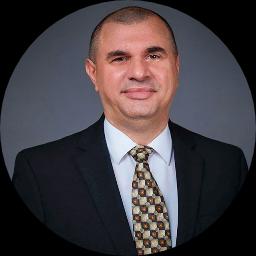
Eric Troy
LMHC
Licensed Mental Health Counselor - Anxiety and Hoarding related concerns
License and NPI on record
- Credentials
- LMHC
- License
- LMHC, Florida · No. MH11564
- NPI
- 1770836074
- Experience
- 15 years
- Languages
- English, Romanian
- State
- Florida
As supplied to BetterHelp. A license can be checked with the state board, and an NPI with the national NPI registry.
- CBT methods
- DBT skills
- Client-centered work
About Eric
Eric Troy is a Licensed Mental Health Counselor (LMHC) in Florida with 15 years of clinical experience. He works with people facing stress, anxiety, depression, grief, relationship concerns, and LGBTQ issues, among other challenges.
He earned dual bachelor’s degrees in Psychology and Sociology, a master’s degree in Psychology with a specialty in Mental Health Counseling, and a doctoral degree in Industrial and Organizational Psychology. After completing his internship and early clinical work, he obtained his Florida LMHC license and has practiced in South Florida’s culturally diverse community.
In sessions he uses clear, evidence-informed methods such as Cognitive Behavioral Therapy (CBT), Dialectical Behavior Therapy (DBT), Narrative Therapy, Client-Centered Therapy, and Solution-Focused Therapy. He adapts these methods to the problem a person brings, focusing on practical steps rather than abstract theory.
Typical work includes helping people reduce repetitive anxious thoughts, learn coping strategies for stress, manage mood symptoms, and address relationship or life-transition problems. He also helps people with concerns tied to identity, caregiving strain, and work-life balance.
Eric describes therapy as a collaborative process. He listens to the person’s story, points out patterns that keep problems going, and practices skills with them in session. Progress is tracked through small, actionable goals and regular review of what is or isn’t working.
He offers therapy in English and Romanian and practices in Florida. Prospective clients are asked to use the site’s matching questionnaire to schedule a first appointment.
How evidence-based approaches translate to online sessions
Client-Centered Therapy focuses on listening and reflecting what a person says so they feel understood and can explore concerns at their own pace. This approach helps when someone needs space to clarify values, relationships, or identity issues.Cognitive Behavioral Therapy (CBT) looks at the link between thoughts, feelings, and actions. CBT uses short exercises and homework to test unhelpful thinking and build new habits for anxiety, repetitive thoughts, or mood problems.
Dialectical Behavior Therapy (DBT) teaches practical skills for emotional regulation, distress tolerance, and clearer communication. DBT techniques can be useful when emotions feel overwhelming or when someone wants concrete tools to limit impulsive reactions.
Finding the right approach is part of the work. The therapist will talk with the person about goals and preferences, try methods that fit those goals, and adjust the plan based on what helps. That collaborative way keeps sessions focused and goal-oriented.
Confirm the session formats offered before booking since formats are not specified here. Online work can make it easier to fit therapy into a busy week, allow shorter check-ins when time is tight, reduce travel time, and let people use quieter surroundings or lower-bandwidth options when needed. These practical benefits often help therapy become a regular part of everyday life.
Areas of expertise
Primary focus
Also works with
Additional focus areas
Therapeutic approaches
Experience
15+ years
Credentials
Florida
Languages
English, Romanian
Frequently asked questions
What kinds of problems does he help with most often?
He commonly works with stress, anxiety, depression, grief, relationship issues, identity and LGBTQ concerns, and related life changes.
What therapeutic approaches does he use?
He uses Cognitive Behavioral Therapy (CBT), Dialectical Behavior Therapy (DBT), Narrative Therapy, Client-Centered Therapy, and Solution-Focused Therapy in his work.
How much clinical experience does he have?
He has 15 years of professional experience working as a mental health practitioner.
What credentials and region apply to this therapist?
He is an LMHC licensed in Florida and practices in that state.
Which languages are supported in sessions?
Sessions are offered in English and Romanian.
Can people from other countries book sessions?
He does not accept international clients at this time.
How are sessions charged?
Cost varies with location and sessions use a subscription that can be canceled at any time.
How do I start working with him?
Select the See online therapy options button, complete the short matching questionnaire, and schedule a first session.
Before you reach out
- Check that the state license on record covers the state you live in.
- If exposure and response prevention (ERP) or another method matters to you, ask whether and how this counselor uses it.
- You do not need to explain every thought or ritual at the start. One example is enough.
- A profile shows the topics a counselor lists; it is not a diagnosis or a promise of results.
If you feel unsafe right now, call or text 988, or call 911.